Uxbridge High Street removals for tight access moves
Posted on 27/07/2026
If you are planning Uxbridge High Street removals for tight access moves, you are probably already dealing with the awkward bits: narrow entryways, limited parking, busy footfall, awkward stair turns, and the general pressure of trying to move something bulky in a place that was never designed for easy loading. Truth be told, that is exactly where a careful removals plan earns its keep.
High street moves are a different animal. They can be perfectly manageable, but only when the route, timing, vehicle size, packing method, and access points are thought through properly. In this guide, we will break down how tight-access moves work on Uxbridge High Street, what makes them tricky, and how to reduce stress without cutting corners. Along the way, we will also cover planning, pricing, safety, and the kind of practical details that often get missed until the van is outside and everyone is looking at the stairwell with a slightly worried expression.
You will also find useful pointers on related services such as man with a van support in Uxbridge, flat removals, and packing and boxes, because tight access jobs usually depend on more than just muscle.
![A view of Uxbridge High Street during daytime with a clear blue sky, showing a commercial area with multiple shops and pedestrians on the sidewalks. In the foreground, a white van is parked on the left side, while a silver car and a white Audi are parked on the right side. Both vehicles are positioned near the curb, adjacent to street lamps and a red customer service point sign attached to one of the building facades. Several people are visible walking or standing, some near shop entrances, with a group gathered under the awning of a shop on the left. The street is paved with cobblestone uplighting, and the surroundings include multi-storey brick buildings with various storefronts and signage. The scene depicts an active commercial district with potential considerations for house removals or furniture transport in the area, suitable for logistical planning by [COMPANY_NAME] for relocating items through this part of Uxbridge.](/pub/blogphoto/uxbridge-high-street-removals-for-tight-access-moves1.jpg)
Why Uxbridge High Street removals for tight access moves Matters
High street removals are not just standard house moves with a few extra parked cars in the way. On Uxbridge High Street, tight access can affect almost every part of the day: how early the team can load, whether a van can stop close enough to the property, how many porters are needed, and whether the job runs in one clean flow or turns into a slow relay of boxes and furniture.
Why does that matter so much? Because the smallest access issue can create a chain reaction. A sofa that looks fine in the living room may suddenly become a problem at the doorway. A wardrobe that is technically movable may not fit around a landing bend. A loading bay that seemed available in theory may be shared, time-limited, or too tight for a larger removal van. That is where careful planning makes a real difference.
In our experience, the most successful tight-access moves are the ones where everyone treats the access as part of the move itself, not as an afterthought. The property, the street, the vehicle, and the timetable all need to work together. Let's face it, if one bit fails, the rest of the day starts to wobble.
For people moving in or around the local area, this is especially relevant because Uxbridge has a mix of shops, flats, older buildings, side entrances, and busier pedestrian zones. If you want the broader local picture before moving, the blog posts on the appeal of living in Uxbridge and insider views on Uxbridge living can help frame why access varies so much from one property to the next.
How Uxbridge High Street removals for tight access moves Works
A tight-access move is usually handled by changing the logistics rather than forcing the same approach you would use on a wide suburban road. The work starts with a survey, phone assessment, or detailed discussion about the property and the route. The aim is to identify what is actually feasible, not what sounds convenient on paper.
Here is what normally gets assessed:
- Vehicle access: how close the van can safely get to the entrance.
- Doorway width and stair turns: whether larger furniture needs dismantling.
- Parking and stopping time: whether loading needs to be quick and controlled.
- Item size and fragility: whether the move needs extra padding or two-person handling.
- Timing: whether off-peak hours will reduce disruption.
Once those points are clear, the move is usually matched to the right vehicle and team size. Sometimes a full-size van is best. Other times, a more compact vehicle or a man and van service is simply more practical because it can access tighter spaces with less drama. There is no point sending a large lorry to a street that does not want one. That sounds obvious, but you would be surprised how often it gets overlooked.
The actual moving process tends to follow a controlled sequence: protect the property, load the heaviest items first, manage awkward pieces separately, and keep the route between door and van as clear as possible. If the move involves a flat above a shop, or a high street building with shared access, the team may also coordinate with neighbours, landlords, or building staff to avoid bottlenecks. That bit can save a lot of time and a fair bit of muttering.
Key Benefits and Practical Advantages
When tight-access moves are handled properly, the benefits are not just about convenience. They affect safety, cost control, and how much energy you have left at the end of the day. Moving is tiring enough without having to fight the environment as well.
- Less risk of damage: Smaller vehicles and careful handling reduce the chance of scraping walls, door frames, or vehicle bodywork.
- Better time control: A route that has been thought through usually means fewer pauses and less waiting around.
- More accurate pricing: When access is clear from the start, estimates are often more reliable.
- Lower stress: A proper plan removes a lot of last-minute panic.
- Safer lifting: Better access means fewer awkward carries and less strain on everyone involved.
Another quiet advantage is that good planning often protects the property itself. Tight corridors, communal entrances, and old staircases can be surprisingly unforgiving. Even a small bump can leave a mark. If you are moving furniture or specialist items, it is worth seeing what support exists for furniture removals in Uxbridge and, for heavier or more delicate pieces, piano removals.
There is also a commercial benefit that people sometimes miss. A well-run move causes less disruption to businesses, neighbours, and passers-by. On a busy high street, that matters. Nobody wants a loading problem becoming a public spectacle at 8:30 in the morning. Been there, seen the sighs.
Who This Is For and When It Makes Sense
This type of move is a strong fit for anyone whose property access is more complicated than average. That could mean a flat above a shop, a terrace with a narrow entrance, a high street office with restricted loading, or a home where the nearest parking is a short walk away and the stairwell does not exactly welcome wide furniture.
It also makes sense for people who want a more efficient move without overcommitting to a large, expensive setup. For some jobs, a smaller team and the right vehicle are a smarter solution than a big van and lots of unused capacity. If your move is simple but the access is the challenge, that is exactly the sort of scenario where a compact, flexible approach shines.
The following groups often benefit most:
- Tenants moving into or out of flats on the high street
- Homeowners in older buildings with awkward stairways
- Small businesses relocating stock, desks, or equipment
- Students moving between shared accommodation and compact rooms
- Anyone needing a same-day or time-sensitive move
If that sounds like you, you may also find the local service options for student removals, office removals, or same-day removals useful depending on the type of move. Different jobs, different pressures. Simple as that.
Step-by-Step Guidance
Here is a practical way to approach a tight-access removal on Uxbridge High Street without losing control of the day.
- Measure the access points. Check door widths, stair turns, lift dimensions if relevant, and the distance from the property to where a van can reasonably stop.
- Walk the route. Look at pavements, kerbs, steps, bollards, and any shared entrances. What looks fine from the front can change once you actually carry a wardrobe through it.
- Sort the furniture. Decide what must be dismantled, what can stay intact, and what should be wrapped separately. If you are unsure, packing support can make a real difference.
- Choose the right moving method. For some jobs, a smaller van and extra carries are best. For others, a larger removal vehicle still works if access is timed carefully.
- Protect the property. Use floor covering, edge protection, and padded wraps where needed. Tight spaces are where scuffs happen.
- Plan timing around traffic and neighbours. Early starts may help, but only if they are realistic for the building and the street.
- Keep essentials separate. Make sure valuables, documents, keys, chargers, and overnight items are not buried in the main load.
- Confirm the last mile. The final stretch from van to entrance is usually where the challenge lives. Keep it clear.
One useful habit is to take a quick photo or two of the entrance, stairwell, and parking position before moving day. It is not a formal survey, and it is not a substitute for proper planning, but it can jog everyone's memory when the day gets busy. Those little details help.
If the move includes boxed items and fragile belongings, take a look at packing and boxes guidance and build the packing schedule around access, not the other way round. That sounds minor, yet it is often the difference between a smooth unload and a pile of box re-labelling at the door.
Expert Tips for Better Results
Over time, the same principles keep showing up in successful tight-access moves. They are not flashy. They are just effective.
- Use smaller loads more efficiently. If the route is awkward, it may be better to organise the furniture in a way that reduces repeated handling.
- Disassemble early. Beds, table legs, shelving, and bulky items often move faster when taken apart in advance.
- Keep one person on route control. A second pair of eyes outside can spot pedestrians, bins, cars, and timing issues before they become a problem.
- Avoid overfilling boxes. Heavy boxes are miserable on stairs. The box always looks innocent until someone lifts it.
- Reserve a little flexibility. Traffic, weather, and access delays happen. Build in a cushion if you can.
It also helps to think in layers. First the access. Then the route. Then the load order. Then the final placement inside the destination. If one layer is off, the whole move can feel sticky. If all four are aligned, the day can feel oddly calm, almost boring in the best possible way.
If you want to understand the wider service background before choosing a provider, the services overview and removal services pages are useful places to start. For a more general view of local help, the page on removal companies in Uxbridge can also help you compare the sort of support available.

Common Mistakes to Avoid
Most tight-access problems are preventable. The issue is usually not bad luck; it is incomplete planning. Here are the mistakes that cause the most grief.
- Assuming the van will fit. Never assume. Always check the route.
- Ignoring parking restrictions. A loading space that disappears at the wrong time can throw everything off.
- Leaving dismantling until moving day. That is a classic time sink.
- Underestimating heavy or awkward items. Sofas, wardrobes, and office cabinets are the usual suspects.
- Packing fragile items badly. One broken lamp in a narrow stairwell can become a small but annoying disaster.
- Not telling the removals team about access issues early enough. This is probably the biggest one.
Another common mistake is trying to treat every move like a full-house job. If you are only moving a small flat, a compact access solution is often better than a large-scale setup. That is one reason people look at flat removals or a more nimble man with a van option rather than a bigger vehicle. The right tool for the job. Nothing fancy.
Tools, Resources and Recommendations
There are a few practical tools and resources that can make a tight-access move much easier. None of them are exotic, but they matter.
| Tool or resource | Why it helps | Best used for |
|---|---|---|
| Measuring tape | Confirms furniture and doorway dimensions before moving day | Wardrobes, sofas, beds, appliances |
| Furniture blankets and wraps | Protects items and nearby surfaces during narrow carries | High-value or delicate pieces |
| Labels and marker pens | Keeps boxes organised when the load has to be split or staged | Multi-room or multi-drop moves |
| Disassembly tools | Helps reduce item size before carrying through restricted access | Beds, tables, shelving |
| Storage option | Useful if the property is not ready or access is only temporary | Delayed handovers, phased moves |
Sometimes the best recommendation is simply to slow down the choice of service and speed up the planning. If your access is very limited, have a look at removal van options and storage in Uxbridge if you need a staged move. That can save you from trying to do too much in one go, which is a common trap.
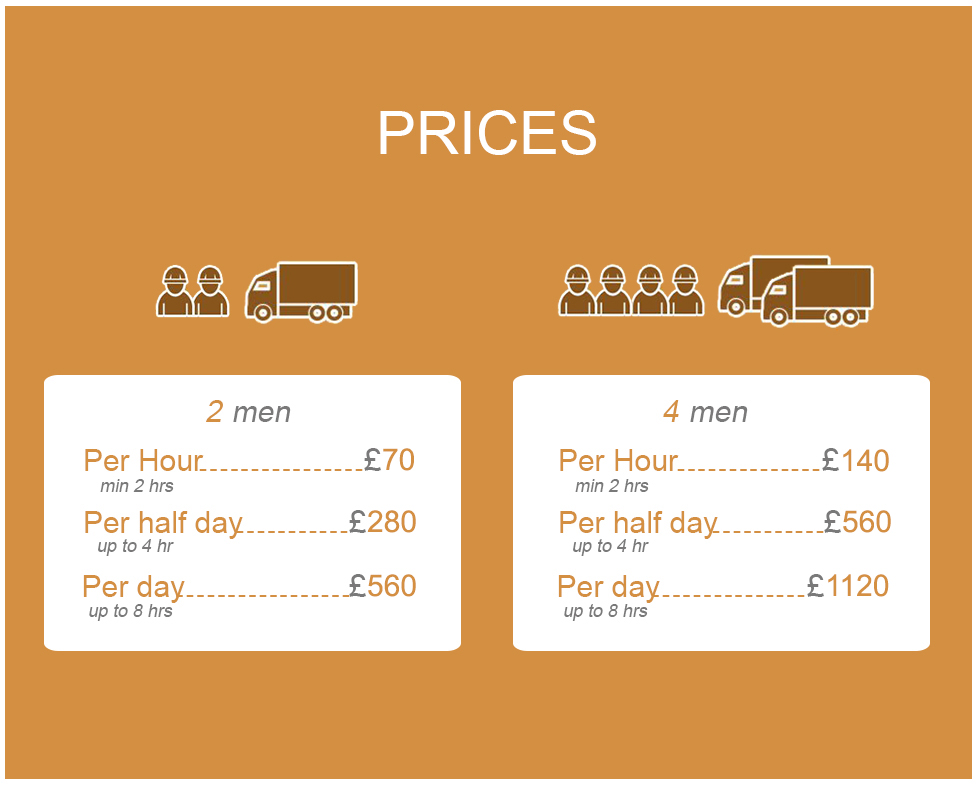
For moving costs and how quotes are usually structured, the pages on pricing and quotes and our prices are useful to review. If you prefer to start with the company background, about us is worth a look too.
Law, Compliance, Standards, or Best Practice
For removals, the most sensible approach is to focus on recognised UK best practice rather than making assumptions about what must happen in every case. A good removals provider should work with sensible manual handling practices, appropriate vehicle loading, and practical safety measures that reduce avoidable risk.
That means, in plain English:
- Workers should not be asked to lift in a way that is unsafe or unrealistic.
- Loads should be secured properly. Loose items are a hazard, not just an inconvenience.
- Access routes should be assessed before the job starts.
- Property protection should be used where needed.
- Insurance and clear terms should be in place.
It is also sensible to pay attention to building rules, landlord expectations, and any local parking arrangements around the high street. In some cases, the practical side matters more than the formal side: knowing when a vehicle can stop, where people can pass, and how to keep the entrance clear. That is the real-world standard, if you like.
You can also check a provider's stance on health and safety, insurance and safety, and terms and conditions. Those pages are not glamorous, obviously, but they are the bits that help you judge whether the operation is well run. Likewise, if you care about responsible disposal, recycling and sustainability is worth reviewing.
Options, Methods, or Comparison Table
There is more than one way to manage a tight-access move. The best option depends on distance from the property to the vehicle, the amount of furniture, and how much flexibility you have on timing.
| Method | Best for | Strengths | Trade-offs |
|---|---|---|---|
| Man and van | Small to medium loads, awkward access | Flexible, compact, efficient | May require more trips for bigger moves |
| Full removal van | Larger homes or bulkier furniture | Higher capacity, fewer runs | Needs better access and parking space |
| Phased move with storage | Delayed completions or limited access windows | Reduces pressure on moving day | Needs extra coordination |
| Same-day move | Time-sensitive relocations | Fast handover, immediate completion | Less room for delay if access changes |
If you are comparing options, do not only look at vehicle size. Look at the route, the lifting distance, the presence of stairs, and the sort of items being moved. A smaller, well-planned job can be smoother than a bigger vehicle shoehorned into a tricky street. In practice, that is often the deciding factor.
Case Study or Real-World Example
Here is a realistic example based on the kind of scenario that comes up again and again on high streets like Uxbridge.
A couple moving out of a first-floor flat above a retail unit had a modest amount of furniture: a bed, two wardrobes, a sofa, a dining table, and around twenty boxes. The biggest issue was not volume. It was access. The front entrance opened directly onto a busy pavement, parking was limited, and the staircase had a tight turn halfway up. Not dramatic, but awkward enough to slow things down if nobody planned ahead.
The solution was straightforward: the larger wardrobe was dismantled before moving day, boxed items were grouped by room, and the van was scheduled for a quieter loading window. A smaller vehicle was used so it could stop closer to the entrance without causing a major blockage. One person managed the route outside while the others handled the interior carries. No heroics, no chaos. Just sensible steps.
Expert summary: On tight-access high street moves, the winning formula is usually not force. It is reducing friction. Measure first, match the vehicle to the street, dismantle what you can, and keep the loading route clear. That sounds simple because, honestly, it is. The difficulty is sticking to it when the day gets busy.
The move finished on time, with no damage and no need for a second panic run. Not every move is that tidy, but this one worked because the access issues were treated as the main job, not the side issue.
Practical Checklist
Use this checklist before moving day. A lot of stress disappears once these boxes are ticked.
- Measure doorways, corridors, stair turns, and furniture dimensions.
- Confirm where the vehicle can stop and for how long.
- Check for parking restrictions, loading limits, and access time windows.
- Decide which items need dismantling in advance.
- Wrap fragile furniture and protect corners, doors, and floors.
- Label boxes clearly and keep essentials separate.
- Tell the removals team about any lifts, tight stairwells, or shared entrances.
- Arrange storage if the move needs to be split into stages.
- Review pricing, insurance, and service terms before confirming.
- Leave a little time buffer. Even twenty minutes can help.
And one more thing: if you are moving a special item, such as a piano or unusually large wardrobe, say so early. It saves everyone from that awkward moment when the item reaches the staircase and suddenly the whole room goes quiet.
Get a free quote today and see how much you can save.
Conclusion
Uxbridge High Street removals for tight access moves are absolutely manageable when the access is planned as carefully as the packing. The trick is to stop thinking of the street as a minor detail and treat it as one of the main factors shaping the entire move. Once you do that, choices become clearer: smaller vehicles where needed, smarter timing, better packing, and fewer surprises.
Whether you are moving a flat, a shop, an office, or a single awkward room of furniture, the goal is the same: reduce friction and keep the day steady. That is what makes the difference between a move that grinds along and one that feels controlled from the first box to the last chair. Honestly, that calm finish is worth a lot.
For further reading and practical service information, the pages on removals in Uxbridge and removal services are a good next step if you want to explore your options with a bit more confidence.
Sometimes the smoothest move is the one that was planned quietly, carefully, and with just enough patience. That is usually the right way round.
![A view of Uxbridge High Street during daytime with a clear blue sky, showing a commercial area with multiple shops and pedestrians on the sidewalks. In the foreground, a white van is parked on the left side, while a silver car and a white Audi are parked on the right side. Both vehicles are positioned near the curb, adjacent to street lamps and a red customer service point sign attached to one of the building facades. Several people are visible walking or standing, some near shop entrances, with a group gathered under the awning of a shop on the left. The street is paved with cobblestone uplighting, and the surroundings include multi-storey brick buildings with various storefronts and signage. The scene depicts an active commercial district with potential considerations for house removals or furniture transport in the area, suitable for logistical planning by [COMPANY_NAME] for relocating items through this part of Uxbridge.](/pub/blogphoto/uxbridge-high-street-removals-for-tight-access-moves3.jpg)